Summer Event Season Special Offers. Click here


Planning Your 2026-2027 Event Season: Essential Checklist for NZ Event Coordinators
You know that feeling in June when the last outdoor event is finally done, everything’s packed away, and you tell yourself you’ll sort next season properly this time? Not scramble for gazebos two weeks before the first market. Not realise mid-October that the canopy you used all summer is actually a write-off. Really plan it.
And then… You don’t. Because June feels far away from September, and there’s always something more urgent.
It’s understandable. But here’s the thing — the coordinators who have the smoothest event seasons aren’t more organised than you by nature. They just do one thing differently: they sort the boring stuff in June, when nobody’s asking them for anything yet.
So if you’ve got half an hour and a coffee, let’s actually do it.
First: Map Out When You Actually Need Things
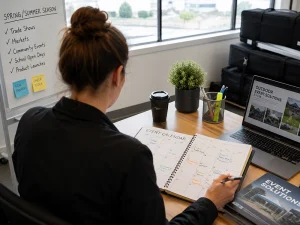
Before equipment, before budgets, before anything else, get a calendar in front of you and block out your season.
New Zealand’s outdoor event season runs roughly from September through April, with the real crunch sitting between November and March. But within that window, it’s rarely one steady flow. School galas cluster around Terms 3 and 4. Summer markets are different from Christmas markets. A&P shows have their own regional calendar. And if you’re managing multiple events or venues, there will be weekends when you need gear in two places at once, and nobody’s flagged that yet.
Rough dates are fine at this stage. You’re not locking anything in. You’re just trying to see the shape of what’s coming, so the pressure points aren’t a surprise when you’re standing in the middle of them.
Then: Go Through What You Actually Have
This is the step most people skip or do too quickly. Don’t just check whether the gazebo is still there. Actually, open it up.
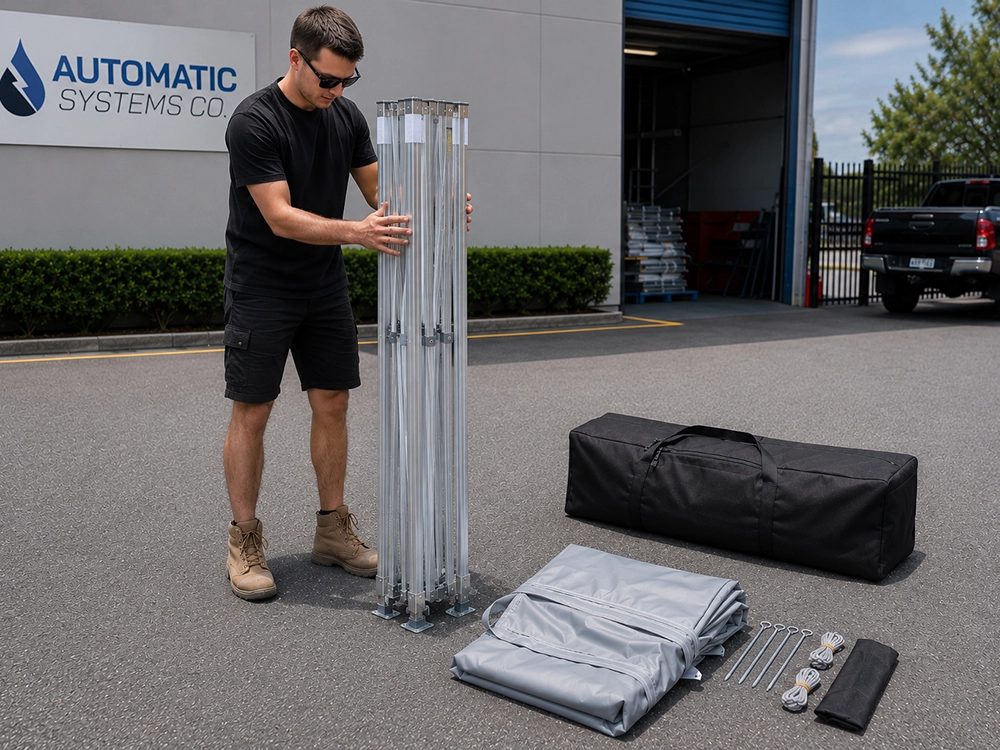
Pull out every piece of event shelter equipment, including your gazebo, sidewalls, weights and accessories, that you own and go through it properly. What you’re looking for:
- Canopy fabric: tears, fading, patches where the waterproofing has worn through, and water pools instead of running off
- Frame joints and connectors: anything that doesn’t lock cleanly, legs that flex when they shouldn’t, and early rust on steel frames
- Carry bags: broken zips, holes, handles coming away from the seams
- Anchoring kit: bent pegs, frayed guy ropes, weight bags that don’t seal properly
Anything borderline now will fail at the worst possible time. That’s not pessimism, it’s just how gear works. Better to find out in June than at 6:30 am on a Saturday in October when you’ve got a stall to set up and no backup.
The Gear Gap: What You Have vs What You Actually Need
Here’s where it gets honest. Most event coordinators are running their season on equipment that made sense two or three years ago. The event mix has changed, the scale has changed, but the gear hasn’t caught up.
Think about each type of event you’ve got coming and whether what you own actually fits it. Market stalls are usually compact and solo-operated — you need something one person can carry and set up without asking for help. That’s a very different requirement from a corporate activation where the presentation needs to look polished from the moment you open the box.
Sporting events often need multiple smaller shelters rather than one large one, because site layouts change and flexibility matters more than coverage. Community and cultural events need quick setup from volunteers who’ve never done it before, which means complicated is the enemy.
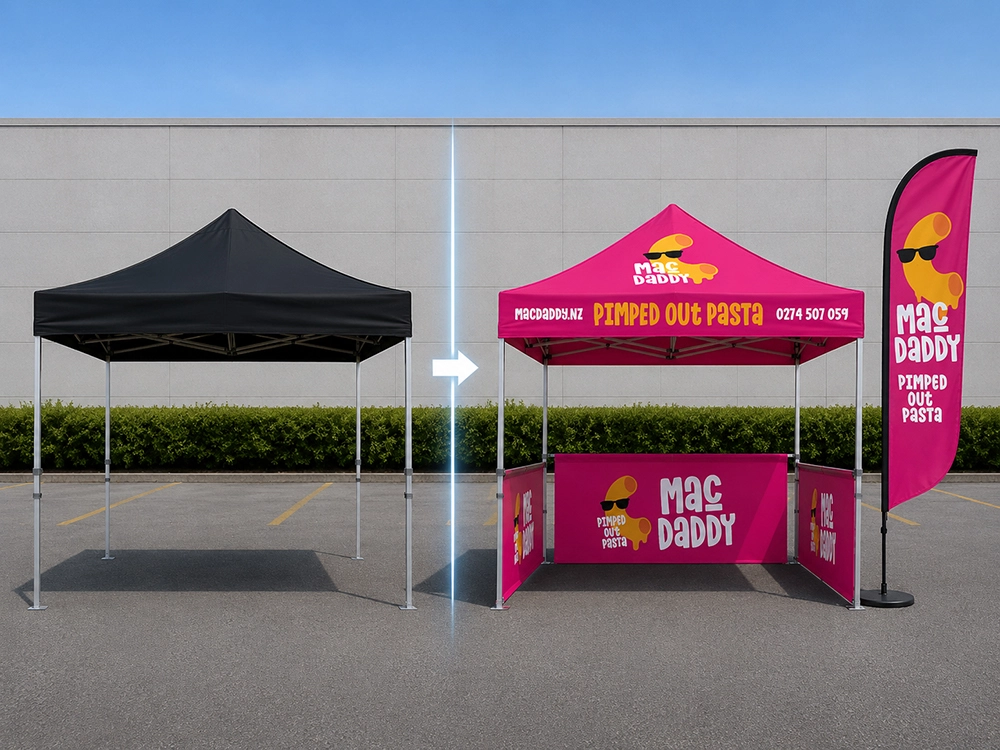
Commercial event organisers may also benefit from branded gazebos and custom printed event displays — worth factoring into your gap check if presentation and brand visibility are part of the brief.
If your current gear was bought for a different version of your event programme, that’s worth acknowledging now. Not necessarily worth replacing everything — but worth knowing where the mismatch is before you’re improvising on the day.
Sort Lead Times Before They Become Your Problem
This is the one that catches people every single year. Custom printed canopies, branded marquees, and any made-to-order items — they take time. Depending on what you need, you’re looking at two to four weeks for production on top of delivery.
If your first big event is in October, July or August, that’s when you need to be confirming specs and placing orders. Not September, when production schedules are already tight, and everyone else has had the same realisation two weeks before you.
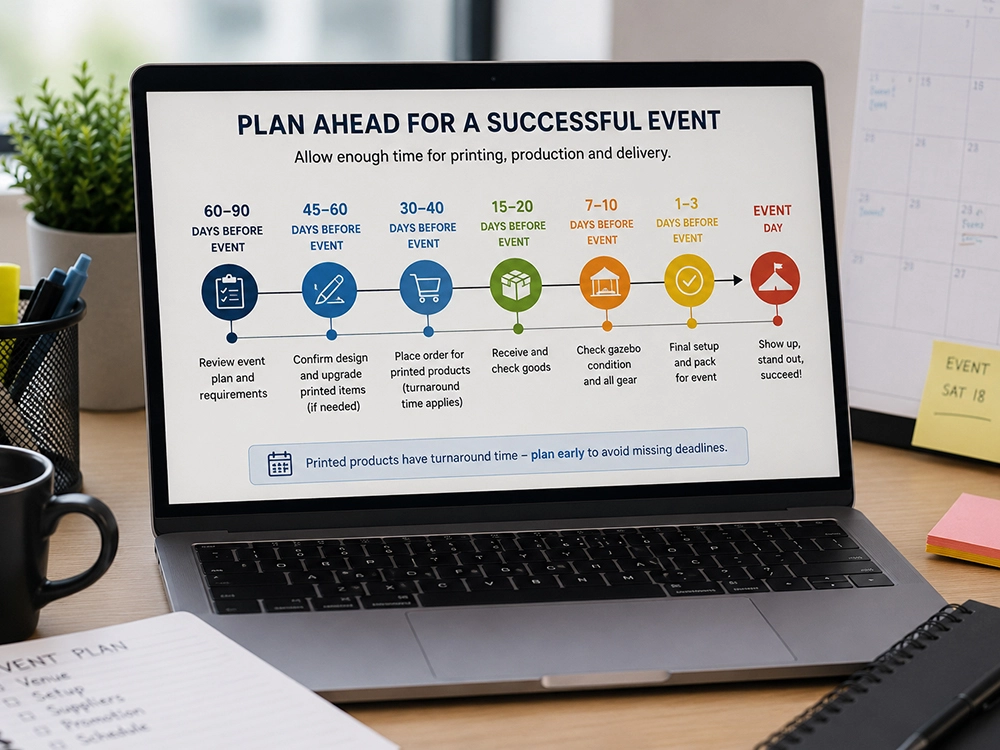
The same logic applies to replacement parts. If your audit turned up a worn connector or a canopy that’s on its last season, sort the replacement parts now. Not urgently, not in a panic, just quietly, while you still have time to get it right.
One Thing People Always Forget Until It Rains
Weather contingency. Not the dramatic stuff — not “what if there’s a cyclone.” Just the ordinary question of: what happens if it rains?
Some events can run in the rain if you’re set up for it. Others genuinely can’t. Know which is which before the season starts, not when you’re watching a dark cloud roll in from the Tasman at 9am with 200 people expected at midday.
If your events can run wet, make sure your sidewalls are in good shape, and your anchoring is proper — wind and rain come together. If they can’t, know where your nearest covered alternative is and make sure your team knows the plan before the day, not on the day.
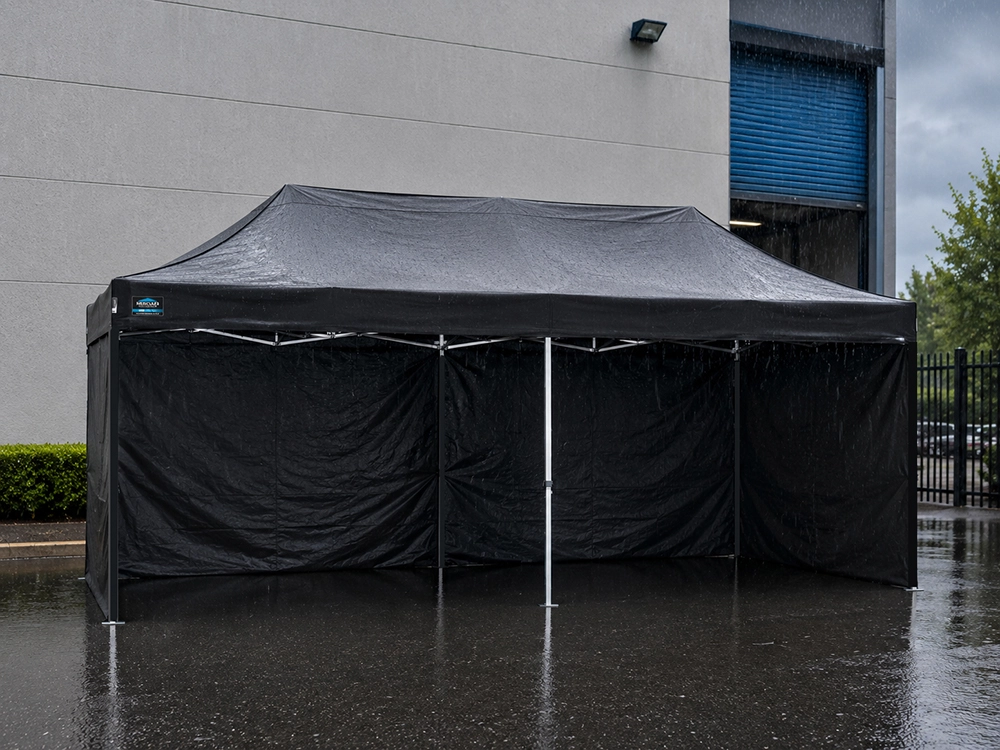
Honestly, a good shelter solves most of the rain problem. But only if it’s the right shelter, in the right condition, ready to go.
That’s really all it is. A calendar, an audit, a gap check, and a lead time plan. An hour of work in June saves a month of stress in October.
If your audit flagged gaps — or you’re scaling up and need something new — take a look at our event marquees, custom branding options, and banner and display products. Or come into one of our Auckland, Wellington, or Christchurch stores and talk it through in person. We know the season as well as you do.