Summer Event Season Special Offers. Click here



What Makes a Commercial Pop-Up Gazebo Worth the Investment?
There’s a version of this conversation that goes: “But it’s just a gazebo.” And look, I get it. On the surface, you’re buying a frame and a canopy. It goes up, it provides shade, it comes down again. How complicated can the value question really be?
But if you’ve ever watched a cheap one flex and rattle in a moderate breeze, or turned up to a market and spent twenty minutes wrestling a bent leg into position while everyone around you is already set up and trading — you know the difference isn’t abstract. It’s very, very physical.
So let’s actually talk through what separates a commercial gazebo from a consumer one, and why that gap matters more than most people expect before they’ve experienced both.
The Problem With Buying on Price Alone
Most people’s first gazebo is chosen mainly on price. That’s not a criticism — it’s rational. You don’t know what you don’t know yet. You look at two options, one costs $200, and one costs $900, and you think: I’ll try the cheaper one and upgrade if I need to.
Here’s what usually happens. The cheap one works fine for a few uses. Then something bends. Or the canopy starts leaking. Or a connector breaks and you can’t find a replacement part anywhere because it’s a generic unit with no after-sales support. So you buy another budget one. And the cycle starts again.
By the time most people switch to a commercial model, they’ve usually spent more on two or three disposable gazebos than the commercial one would have cost upfront. The maths genuinely doesn’t work out the way it seems like it will at the beginning.
What 'Commercial Grade' Actually Means in Practice
It’s a phrase that gets used loosely, so here’s what it actually means when it comes to a gazebo frame.
Frame tube diameter. Consumer frames are typically 19mm to 25mm in diameter. Commercial frames start at 40mm and go up from there. Hercules commercial models use 40mm, 45mm, and 57mm aluminium tubing depending on the model. That extra thickness is the difference between a frame that flexes visibly under wind load and one that simply doesn’t move.
Wall thickness. Two frames can have the same outer diameter and completely different wall thickness. Thinner walls mean less material where force concentrates, which means faster failure at the joints and connectors. Commercial frames are built with proper wall thickness because they’re designed to be set up and packed down hundreds of times, not dozens.
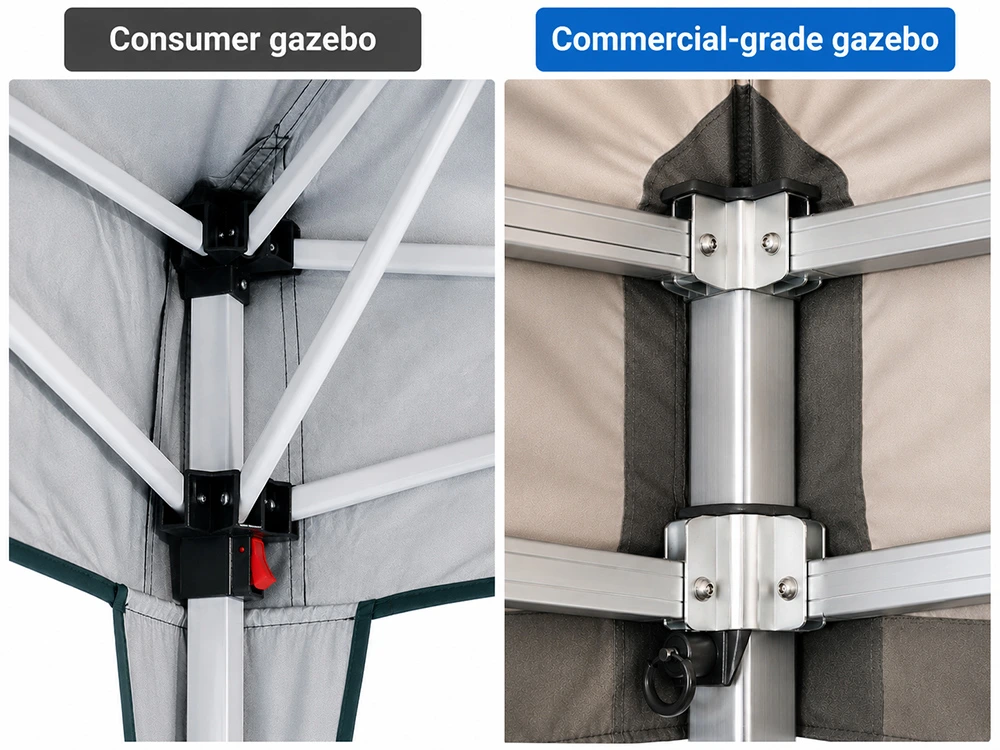
Connector quality. This is where most budget frames fail first. The corners and apex connectors are where all the structural force concentrates during wind events. On a cheap frame, these are often plastic or lightweight metal that fatigues quickly. On a commercial frame, they’re reinforced, they lock properly, and they’re built to stay locked under load.
Wind certification. A commercial gazebo has been engineered and tested to perform in real outdoor conditions, not just listed as ‘suitable for outdoor use’ without any evidence behind that claim. For anyone running public events where other people are sheltering under your gazebo, this matters in a way that goes beyond personal preference.
The Weight Thing — and Why It Cuts Both Ways
People sometimes assume commercial means heavier, and that lighter is better. It’s a bit more nuanced than that.
Aluminium commercial frames are actually lighter than the steel consumer frames a lot of people start with. A Hercules HEX 45A in 3x3m comes in around 20kg. A cheap steel consumer frame of the same size can easily be 30 to 35kg. So switching to commercial can actually mean switching to lighter, not heavier.
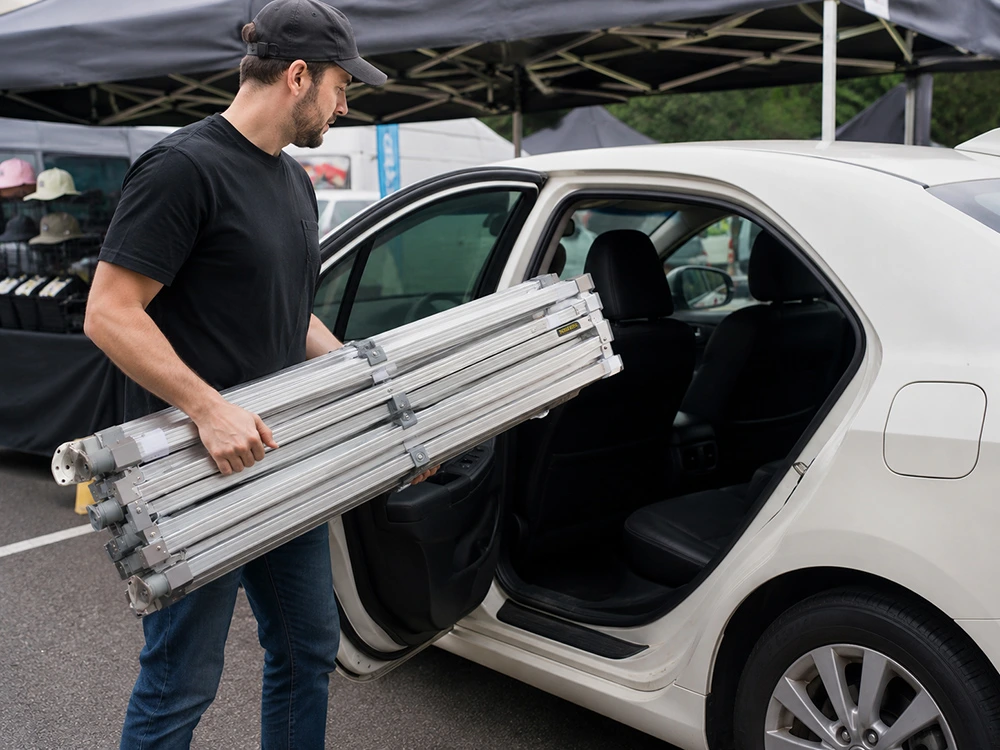
Where commercial frames are heavier is when you compare them to very lightweight consumer aluminium options. Those exist, and they’re portable, but the trade-off is structural integrity. A 12kg aluminium frame that flexes in 30km/h wind isn’t doing what you actually need it to do.
Think about it this way: the goal isn’t the lightest frame. The goal is the lightest frame that actually holds up in the conditions you’ll be using it in. Those are different questions, and confusing them is how people end up with gear that fails them.
Repairability: The Hidden Value Nobody Talks About Enough
Here’s something that almost never comes up in the initial buying decision but becomes very relevant within the first year or two of regular use.
A commercial gazebo is designed to be repaired, not replaced. Individual frame components, canopies, connectors, carry bags — they’re all available as separate parts. If a leg gets damaged, you replace the leg. If the canopy fades after a few seasons of UV exposure, you replace the canopy. The frame underneath keeps going.
A consumer gazebo is designed to be thrown away. There are no spare parts because the manufacturer never expected you to need them. The whole unit is the product, and when any part of it fails, the whole unit is done.
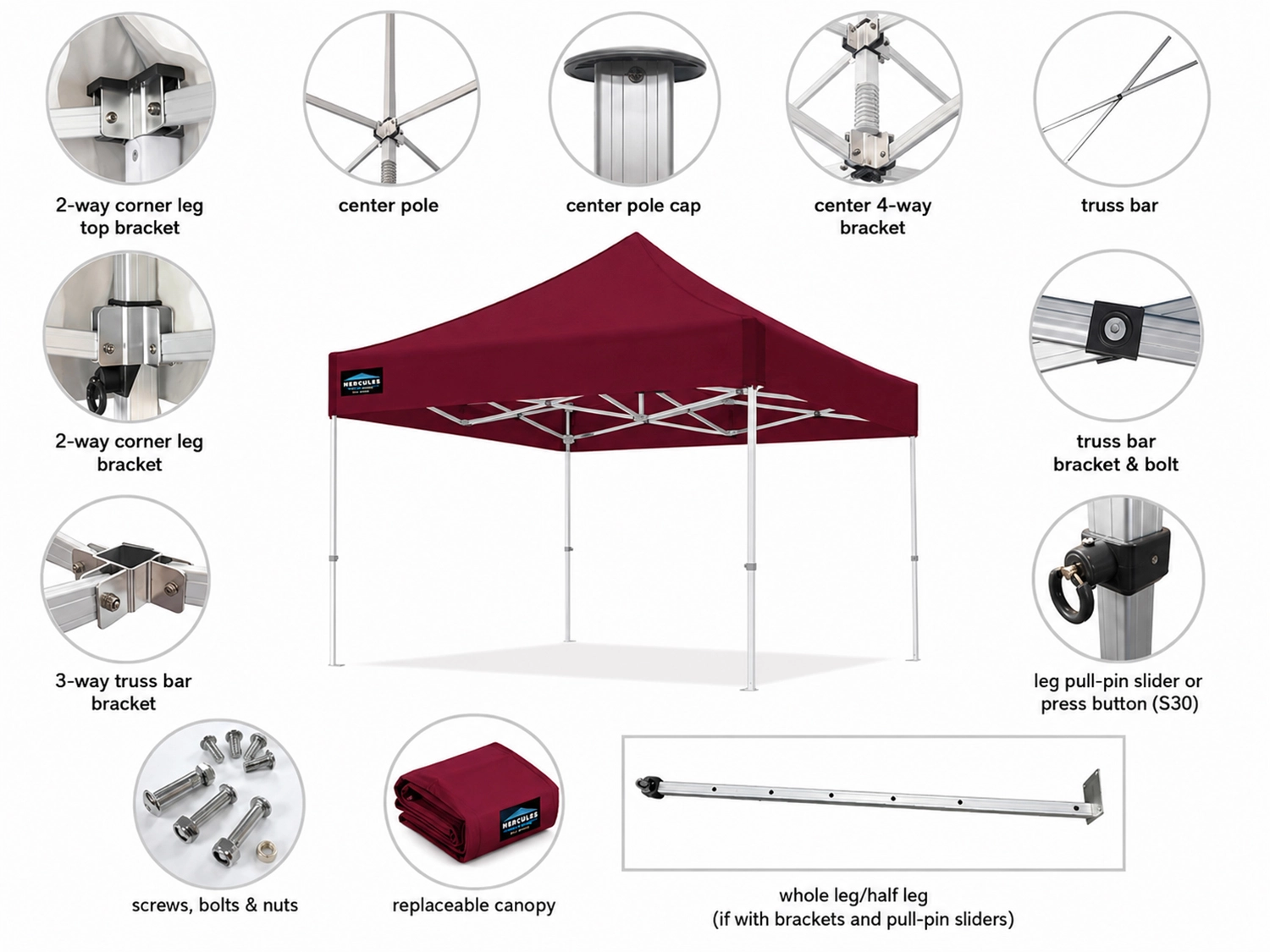 For commercial users, this isn’t a minor convenience — it’s a significant part of the total cost calculation. A Hercules gazebo with a 10-year frame warranty and lifetime screw coverage, with replacement canopies and parts available whenever you need them, has a genuinely different cost profile over five years than a series of budget gazebos that each need replacing every eighteen months.
Which Commercial Model Fits Your Situation
The HEX 45A is our entry commercial model, built for most regular business use. The 45mm hexagonal aluminium frame keeps things light and portable while still being wind certified and fully supported with spare parts. If you’re not sure where to start, this is usually the right answer.
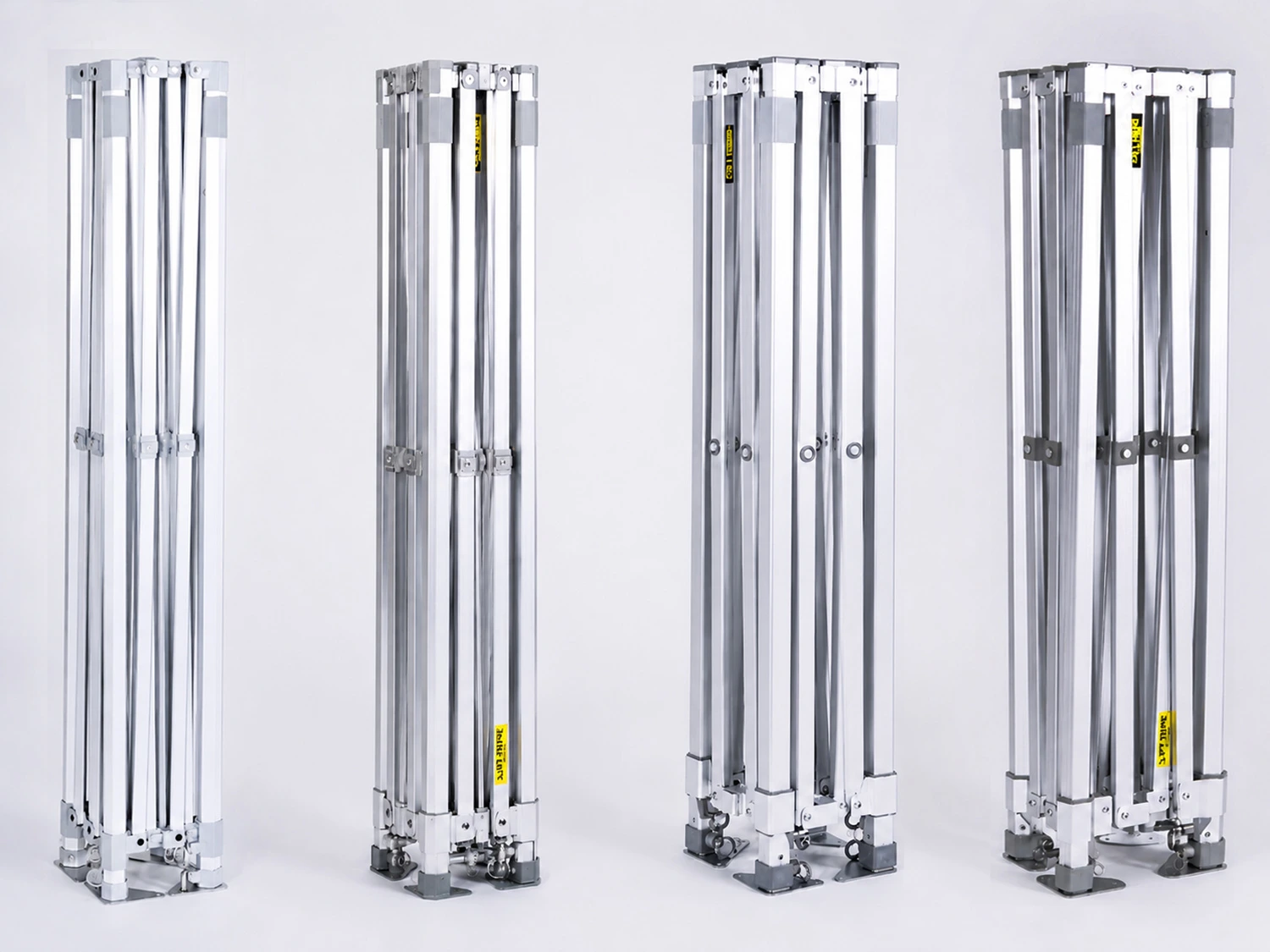
The Pro 40 steps up to a 40mm frame for professional commercial set-ups and frequent commercial use — strong, portable, wind certified, and the right choice once you’re relying on the gazebo regularly rather than occasionally.
The Pro 57 is the top of the range, with a 57mm frame delivering maximum strength for heavier commercial use, high-wind sites, or permanent outdoor setups where rigidity is the priority.
If you want to see the difference in person before committing — and honestly, I’d recommend it, because holding a commercial frame next to a consumer one makes the comparison pretty immediate — come into one of our Auckland, Wellington, or Christchurch stores. Or browse our full range of models here if you’d rather start there. Either way, the conversation is worth having before you buy.