Summer Event Season Special Offers. Click here


Understanding Gazebo Strength Ratings: A Complete Guide to Frame Specifications
If you’ve spent any time looking at gazebo specs, you’ve probably come across numbers like ’40mm frame’ or ’57mm tubing’ without much explanation of what they actually mean. Most people glance at them and scroll straight to the price.
Which is fair. But those numbers are actually the most important thing on the page. They tell you whether the frame is going to hold up under real conditions (wind, repeated setup, coastal air) or let you down the moment things get serious.
So let’s go through what the specs actually mean. No jargon, no engineering background needed. Just a plain explanation of what to look for and why it matters for how you’re going to use your gazebo.
Tube Diameter: The Number That Tells You the Most
When a spec sheet says ’40mm frame,’ it’s referring to the outer diameter of the aluminium tubing the frame is built from. This single number is the clearest indicator of structural strength you’ll find on a product listing.
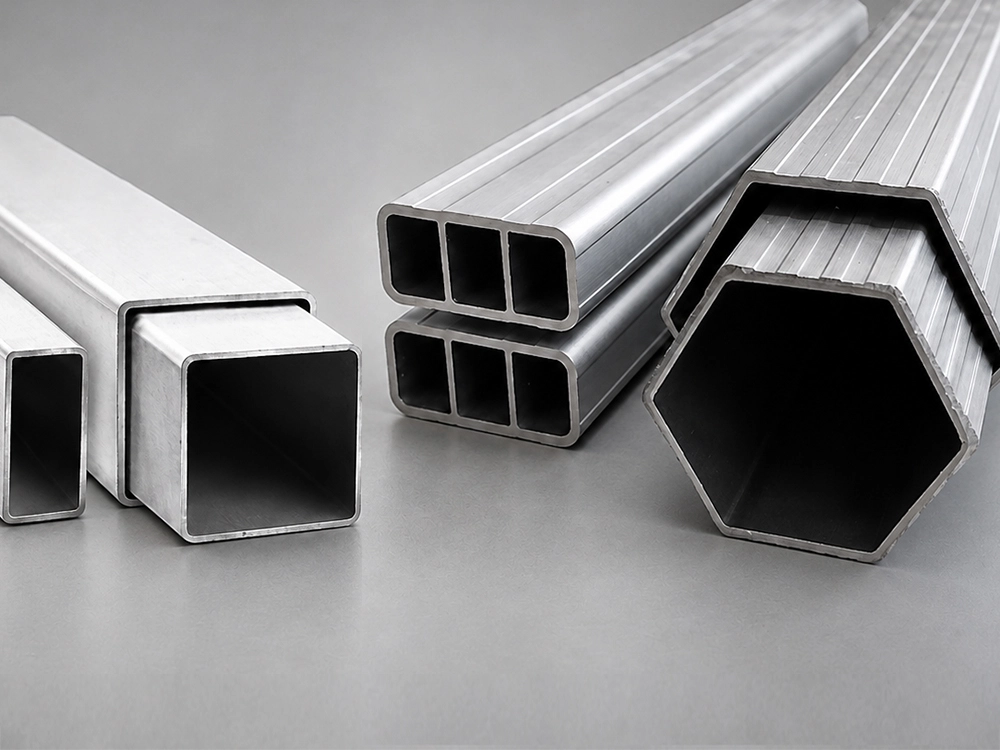 Consumer gazebos typically use tubing in the 19mm to 25mm range. It’s light and fine for occasional use, but put it under repeated wind load or pack it down and set it up every weekend through a season, and the joints start to fatigue. The frame flexes. Eventually something gives.
Commercial frames start at 40mm and go up. Pick up both in person and the difference is immediate: you’ll feel it before you’ve even extended the frame. That’s not just weight. It’s stiffness, solidity, and the kind of confidence that a frame either gives you or doesn’t.
Leg Tube Geometry: Shape Does Matter
It’s not just about tube diameter. The cross-sectional shape of the leg tube also changes how it handles load.
Square and rectangular leg tubes are the most common designs. They’re practical, compact and work well for most applications. But a hexagonal leg tube, like the one used on the HEX 45A and PRO 57, has multiple faces that help distribute forces and resist twisting.
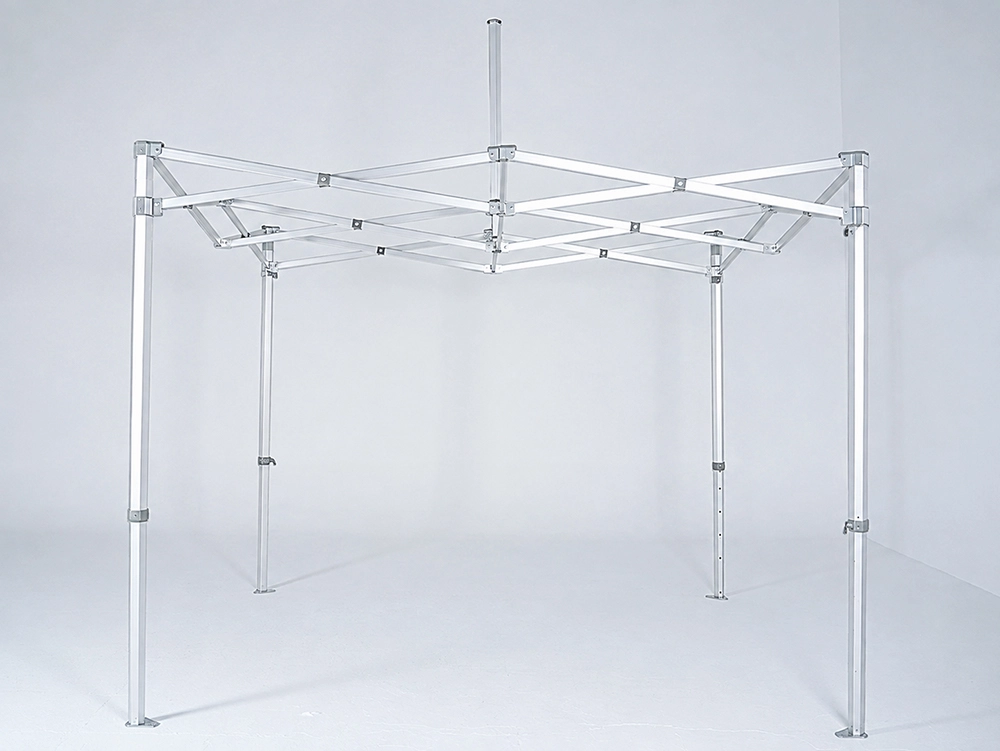
In real-world terms, this means better resistance to forces coming from an angle. That matters when the wind shifts direction or hits the gazebo unevenly. If you’re setting up anywhere exposed—coastal sites, open fields or the Wellington waterfront—leg tube shape is worth factoring in alongside tube diameter and wall thickness.
Wall Thickness: The One People Miss
Here’s the spec that catches people out. Two frames can have identical outer diameters and be completely different structurally, depending on how much aluminium is actually in the wall.
Wall thickness is the measurement of material between the outer surface and the hollow centre of the tube. Budget frames use thin walls to reduce material costs. The outer diameter looks fine on the spec sheet, but there’s not enough metal at the connectors and joints where stress concentrates most.
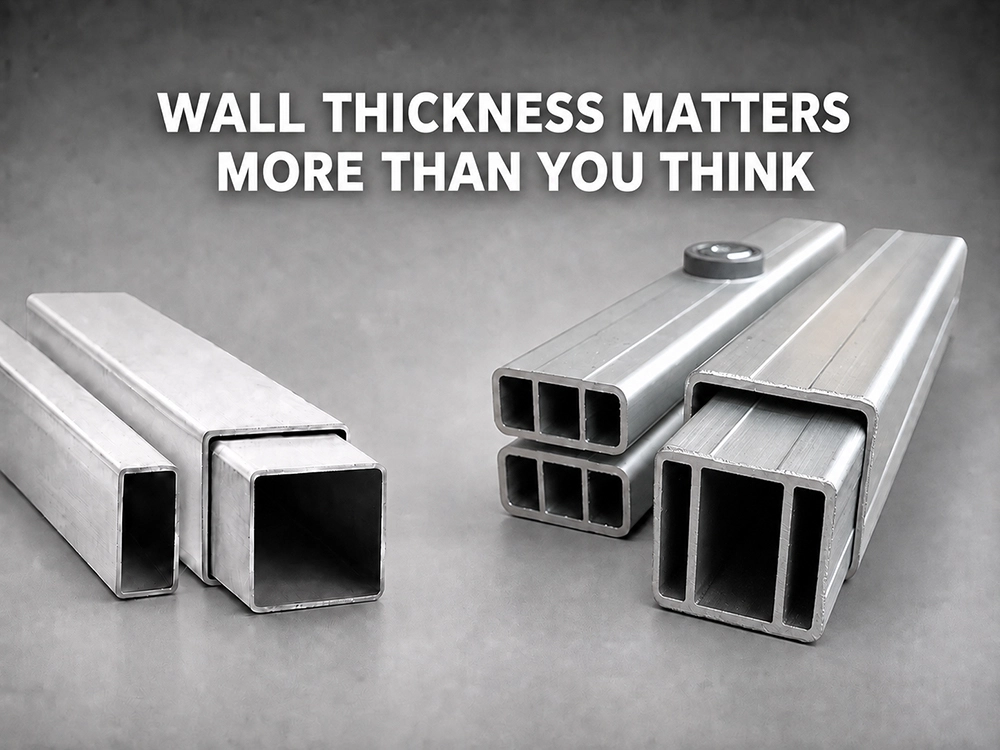 This is why cheap aluminium frames almost always fail at the corners first, not in the middle of a leg. The legs look okay. The walls are thin exactly where it counts. Good commercial frames specify both diameter and wall thickness. If you only see the outer diameter listed, it’s worth asking about the wall spec before you buy.
Wind Certification: Marketing vs Evidence
You’ll see gazebos described as ‘wind resistant’ and others as ‘wind certified.’ These aren’t the same thing, and the gap between them matters.
‘Wind resistant’ is a label. It requires no testing, no evidence, no standard. Almost any gazebo with a frame can claim it. ‘Wind certified’ means the frame has been engineered and independently tested to a specific performance standard.
Hercules commercial gazebos are wind certified. There’s actual data behind the claim, not just a sticker. For anyone running events where other people are sheltering under your gazebo (markets, sports days, community events) wind certification is the level of assurance worth looking for. It’s also a health and safety consideration, not just a quality one.
Connectors: Where Frames Actually Win or Lose
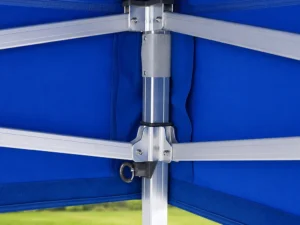
The tubing is only part of the picture. The connectors (corner pieces, center post, truss bar attachments) are where structural integrity is decided under real load.
Budget frames use lightweight plastic connectors that feel fine initially but fatigue quickly under repeated use. The mechanism feels stiff at first, then loose, then stops locking cleanly. If you’ve owned a cheap gazebo for more than a season, you know this pattern.
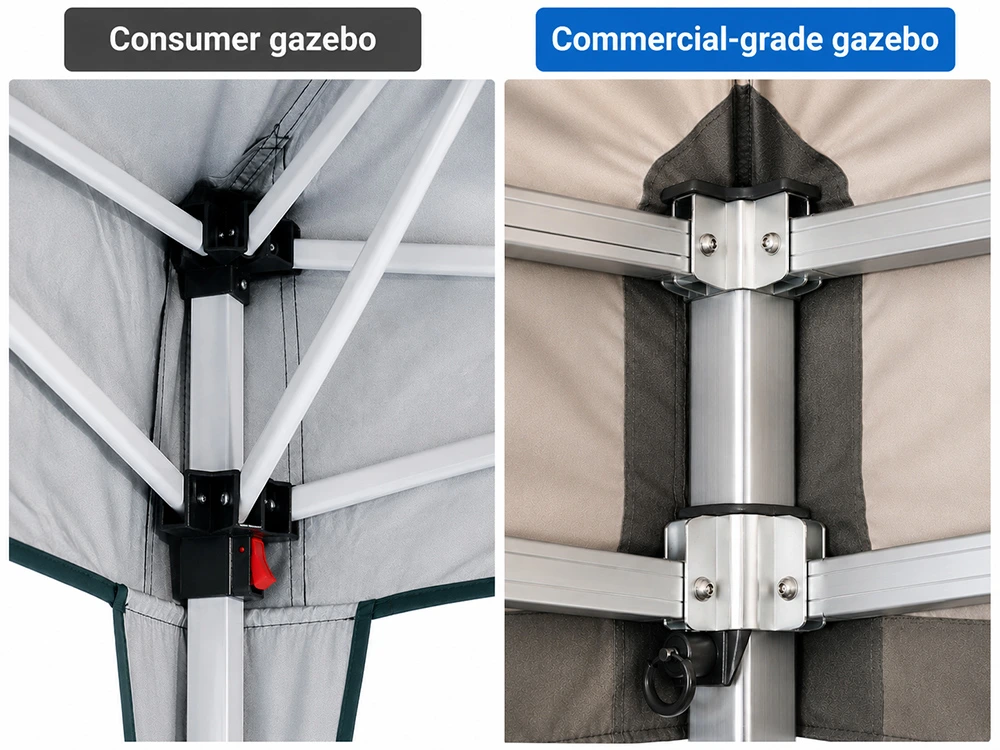 On commercial frames, even plastic connectors are made from reinforced nylon, not cheap plastic. More professional, higher-grade frames step up to aluminium, with extruded aluminium offering greater durability and longer-lasting performance. That distinction matters more than most people realise, especially once a frame has been repeatedly set up, packed down and tested in real-world conditions.
How the Hercules Range Lines Up
With those specs in mind, here’s how our three commercial models sit relative to each other and the kind of user each one is built for.
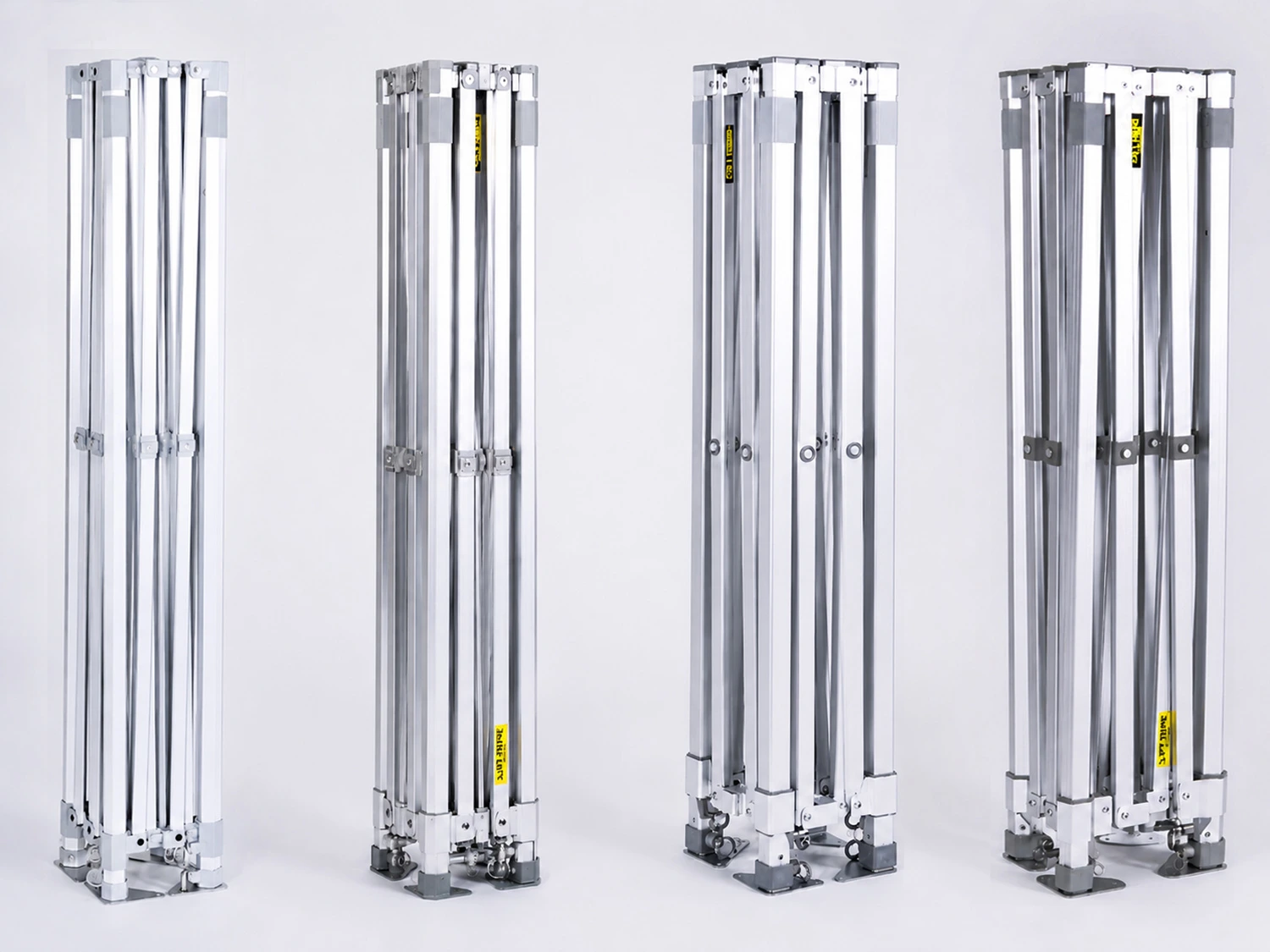
The HEX 45A is our heavy-duty commercial model and the ideal first upgrade from a steel gazebo for most regular business users. The hexagonal 45mm aluminium frame delivers genuine commercial strength alongside good portability. Market vendors, sports clubs, schools, and community organisations use their gazebo regularly through the season. This is the one built for them.
The Pro 40 steps up for professional commercial use and high-frequency deployment. The 40mm rectangular aluminium frame with extruded aluminium connectors is built for users setting up and packing down multiple times a week in variable conditions, who need consistent performance every single time.
The Pro 57 is the strongest aluminium frame in the range. The 57mm aluminium tubing with thick walls is built for maximum rigidity in the most demanding environments: high-wind coastal sites, extended outdoor use, and heavy-duty professional applications where no amount of flex is acceptable.
 Frame specs aren’t the most exciting part of buying a gazebo, but they’re the part that determines whether you’re still using the same unit in five years or shopping for a replacement next season. If you want to compare specs side by side, our model comparison page lays it all out. Or come into one of our Auckland, Wellington, or Christchurch stores and hold the frames in person. The spec sheet makes a lot more sense once you’ve felt the difference with your own hands.