Summer Event Season Special Offers. Click here


Gazebo Frame Materials Explained: Steel vs Aluminium for New Zealand Conditions
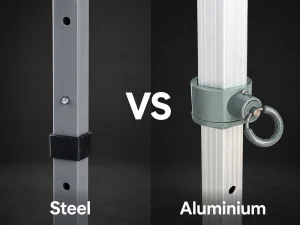
Okay, so you’re looking at two gazebos. Same size, look pretty similar, but one costs noticeably more. You dig into the specs and spot the difference: one’s steel, one’s aluminium. And your brain does what everyone’s brain does — you think, how different can a frame really be? That’s exactly what this guide sets out to answer: how steel and aluminium gazebo frames actually differ, and which one makes sense for New Zealand conditions.
I’m not sure I can answer that in one sentence. But I can tell you that the people who get this decision wrong usually find out the hard way. Either they’re lugging a 35kg steel frame in and out of a van every weekend, wondering why their back hurts, or they’re watching rust creep up the legs of a gazebo they’ve had for eight months and live near the coast.
So, let’s actually talk through it.
Steel Isn't Bad. It's Just... Specific.
Here’s what I mean. Steel is heavy, yes. It rusts over time, yes. But for certain people, it genuinely makes sense, and I’d rather say that than pretend aluminium is always the obvious answer.
If you’re pulling a gazebo out three or four times a year for backyard events, and you’ve got a dry garage to store it in, and you’re not anywhere near the coast, a steel frame is probably fine. It’s cheaper upfront, and it’s not going to fall apart if you treat it reasonably well.
The problem is that most people who buy steel aren’t in that category. They think they are when they buy it, but then the event schedule grows, or they start a market stall, or the gazebo ends up living in a shed with a bit of a damp problem. And that’s when steel starts costing more than it saved.
The Weight Thing Is Real and It Compounds
You know that moment when you’re on your third market of the month, and you have to unload and set up by yourself before 7 am? That’s when the weight difference between steel and aluminium stops being a spec sheet number and becomes a very physical reality.
A commercial aluminium frame in the 3x3m range typically comes in around 18 to 22kg. A comparable steel frame can sit anywhere from 30 to 40kg. That’s not a marginal difference. That’s the difference between a solo setup and needing someone to help you every single time.
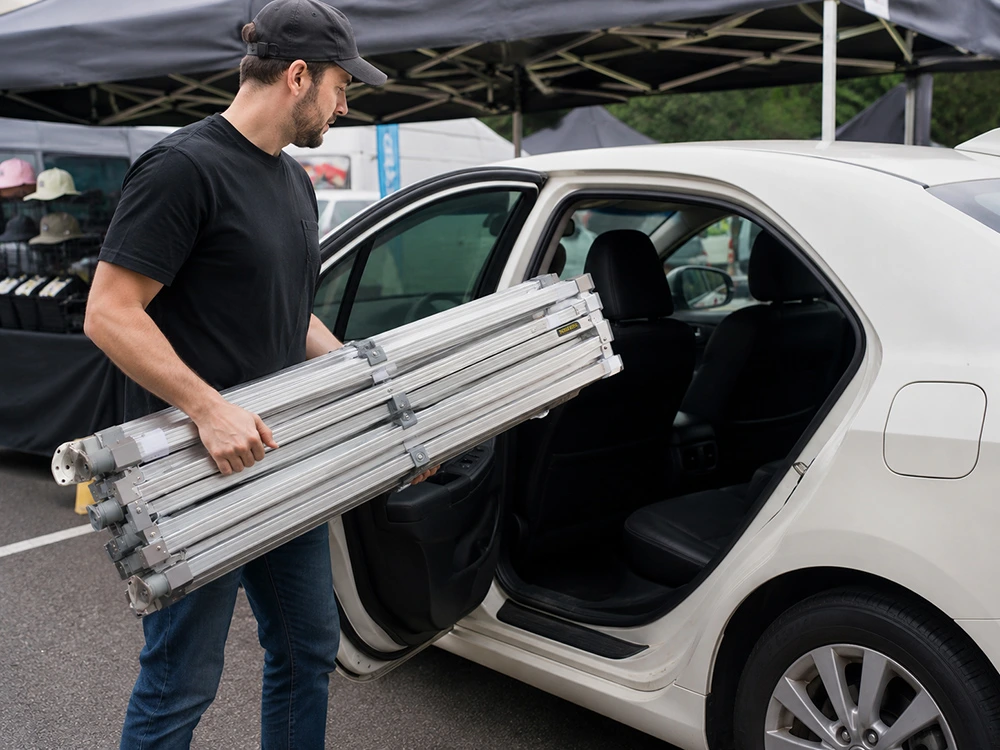
And it’s not just carrying it. Heavier frames are harder to manoeuvre when you’re opening them up, harder to pack back into the bag cleanly when you’re tired, harder on the car boot, and harder on your body generally. For someone doing this once in a while, fine. For someone doing it every weekend from September through April, it matters.
Rust Is Not a Maybe in New Zealand. It's a When.
This is the part that really catches people off guard, especially if they’re new to living near the coast or buying outdoor gear here for the first time.
New Zealand’s coastal air is genuinely harsh on unprotected steel. Salt gets into any scratch in the coating, moisture follows, and rust begins. You can slow it down with maintenance and touch-ups. You can’t stop it entirely. A steel frame gazebo used near the ocean, or even in a humid environment like Auckland in summer, has a meaningfully shorter useful life than the same frame kept inland and dry.
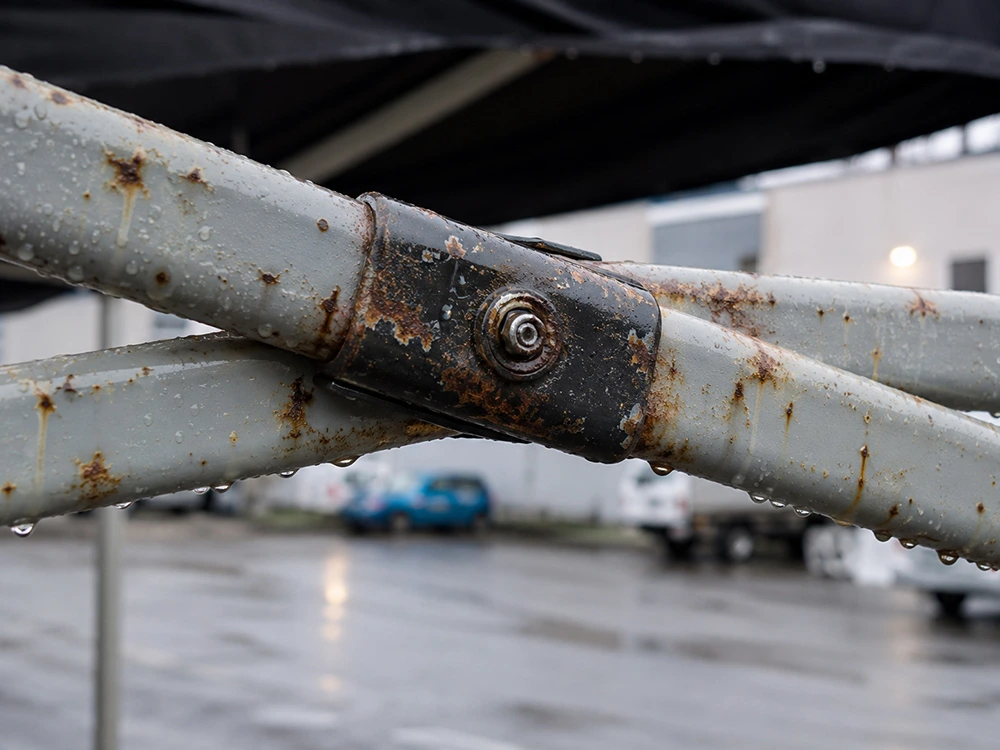
Aluminium handles this differently. It forms a natural oxide layer when exposed to air, which protects it from moisture. It won’t rust in the way steel does. You might notice some surface oxidation over time, a slight dulling or whitish residue, but that’s cosmetic. The structure underneath stays sound.
For market vendors working Wellington’s waterfront, Auckland’s beach-side events, or coastal A&P shows, this isn’t a minor consideration. It’s kind of the whole ballgame.
Why Commercial Users Just... Use Aluminium
Talk to anyone who runs a market stall, manages events professionally, or runs a sports club that sets up and packs down every weekend. Ask them what frame material they use. The conversation is usually pretty short.
Aluminium. Because they’ve done the maths the hard way.
We hear this from customers regularly. They went through two or three cheaper steel gazebos before switching. By the time they’d replaced the second one and added up what they’d spent, they could have bought an aluminium commercial model with money left over. The upfront savings didn’t save them anything.
Invest once. Use it for years. That’s the real value proposition of a good aluminium frame, and once people experience it, they stop questioning it.
What to Actually Look For When Comparing Aluminium Frames
Not all aluminium is the same, and this is worth knowing because some budget options use thin-walled tubing that behaves more like cheaper steel than proper commercial aluminium.
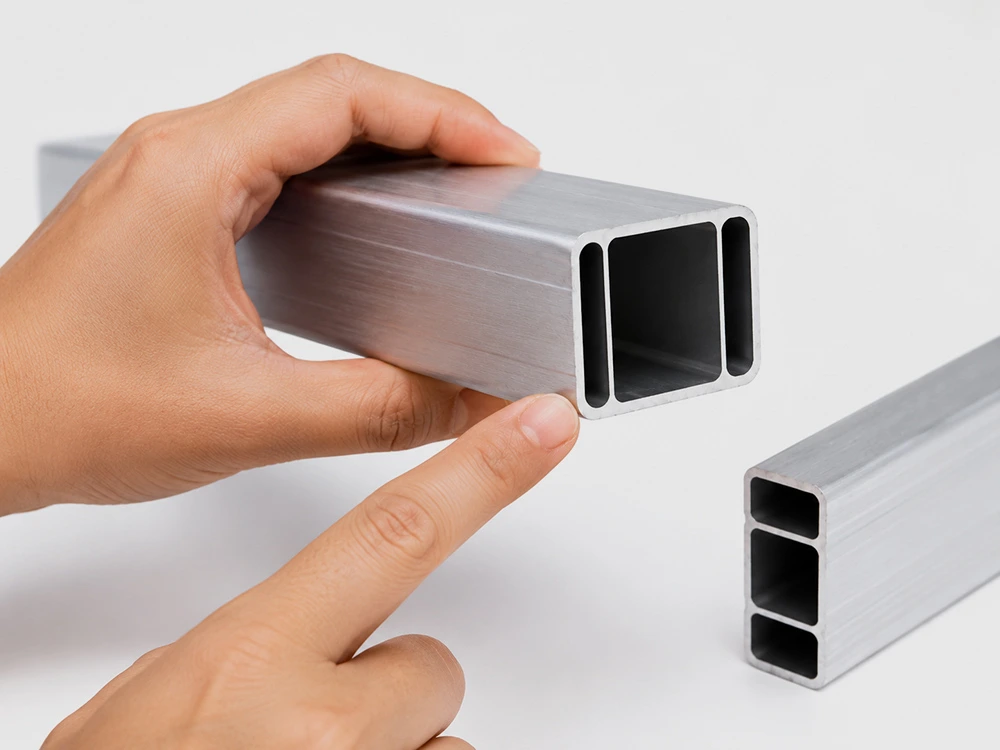
- Tube diameter: Hercules commercial frames start at 40mm. Thinner profiles flex under wind load, which puts stress on the connectors.
- Wall thickness: the outer diameter is only part of the picture. Thin-walled tubing can look the same and be structurally weaker where it counts.
- Connector quality: corners and apex joints are where force concentrates. Budget frames fail here first. Check that connectors are reinforced and lock properly.
- Wind certification: Hercules aluminium gazebos are engineered and wind certified for real outdoor conditions. That’s not just marketing. It matters for events where you’re responsible for other people’s safety.
Which Model Fits Your Situation
The HEX 45A is built for regular business use — ideal for markets and small businesses. It uses a hexagonal frame shape with 45mm aluminium, and that shape distributes stress more evenly than a straight-sided frame, making it particularly good for windy or exposed environments.
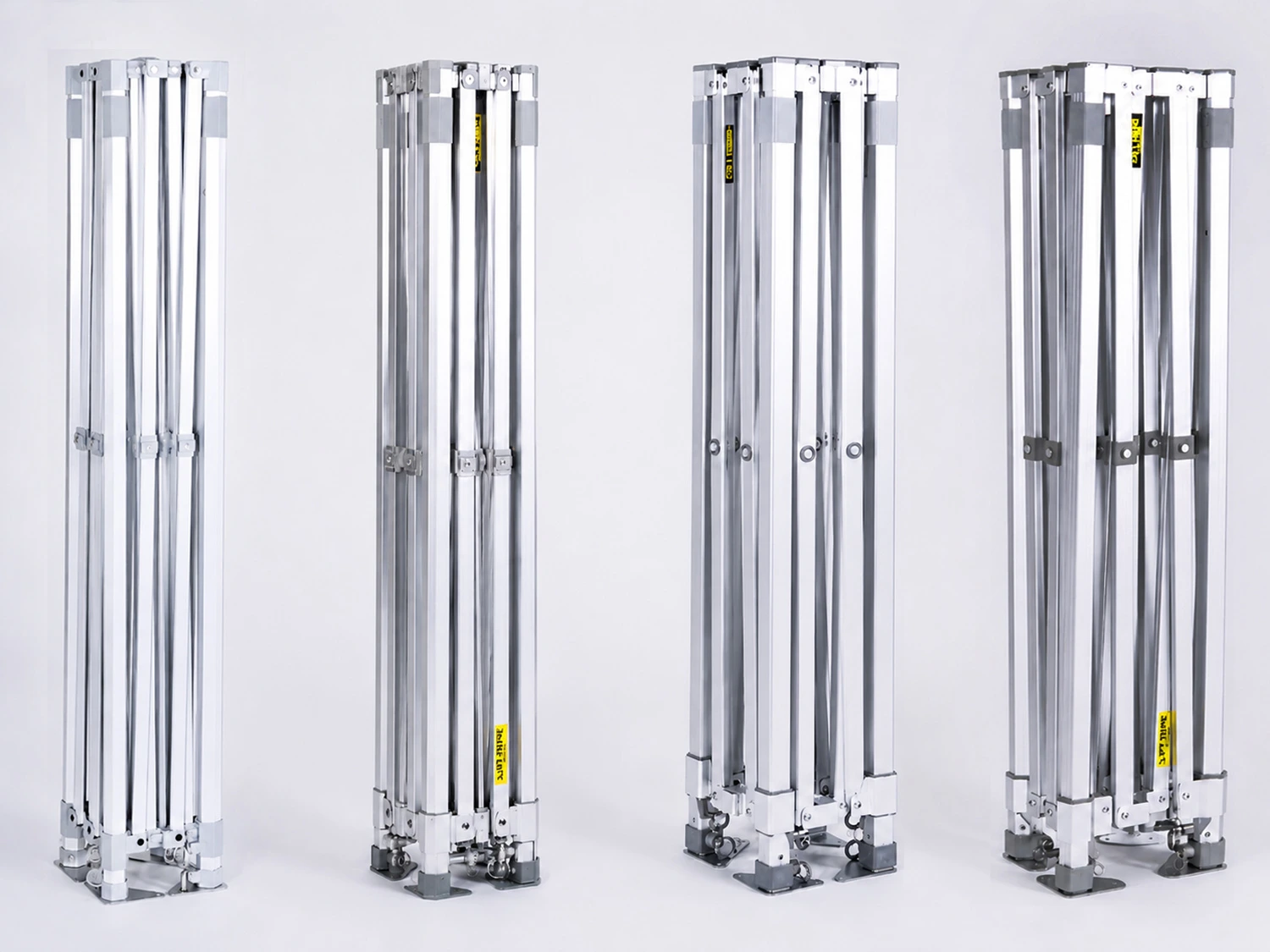
The Pro 40 is built for more frequent commercial use. The 40mm aluminium frame is strong, reasonably portable, and holds up under regular real-world wear. Market vendors, sports clubs, schools — this is the one you’re setting up more than a few times a month.
The Pro 57 steps up to 57mm for situations that genuinely need maximum rigidity. Exposed coastal setups, high-wind sites like Wellington, anywhere the frame needs to hold its position under serious pressure. It’s heavier, but in those conditions, the weight is the point.
Still weighing it up? Our full range of models puts the specs side by side, and our team can walk you through commercial use cases in more detail. Or come into one of our Auckland, Wellington, or Christchurch stores and actually hold the frames. Honestly, the difference is pretty obvious once you do.